International University: The Smarter Way to Earn a UK Degree Locally
An international university is a global gateway that turns language and cultural diversity into your greatest professional strengths. It is essential for anyone wanting to work worldwide, as it transforms you into a skilled professional that global companies need.
Many students today face a common challenge: standing out in a global job market where academic excellence is now the baseline, not the advantage. To bridge this gap, an international university provides a transformative environment that goes beyond textbooks. By immersing students in a multicultural setting, these institutions cultivate “global fluency”—the ability to communicate, adapt, and lead across borders. Graduates emerge not just with a degree, but with a global network and the cultural intelligence that modern employers prioritize. Ultimately, an international university turns a standard education into a powerful competitive edge, preparing you to thrive in any professional arena worldwide.
What Is an International University?
An international university is a school that connects students to a global way of learning. It usually offers programs taught in English, has students and teachers from many countries, and follows international standards so your degree can be recognized worldwide. The key idea is simple: you don’t just study locally, you study in a system designed to prepare you for jobs, internships, and opportunities across different countries, not just one.
Why Students Choose International Universities?

1. Global recognition of degrees
When you graduate from an international university, your degree is often designed to be accepted in many countries, not just one. This matters if you plan to work abroad, join multinational companies, or continue studying overseas, because your qualification already fits international standards instead of being limited to a local system.
2. English-taught learning environment
Most international universities use English as the main language of teaching. This is not just about studying English, but about learning how to think, present, and discuss academic topics in English like real global professionals do. It helps students become more confident in interviews, presentations, and international communication.
3. Multicultural classroom experience
You don’t just sit with people from your own country. You learn alongside students from Asia, Europe, and other regions. This changes how you think—group projects become real-world practice in communication, teamwork, and understanding different perspectives.
4. Stronger career pathways
Many international universities have connections with global companies, internship programs, and career fairs. This means students are not just studying theory, but also getting access to real job opportunities early in their studies.
5. Global mindset development
Over time, students don’t just gain knowledge—they start to think differently. They become more flexible, open-minded, and able to adapt to different cultures and work environments, which is a key skill in today’s global job market.
International University vs. Studying Abroad: What’s the Real Difference?
If you are standing at the crossroads of your education, you’ve likely realized that “Global Education” isn’t a one-size-fits-all term. You have two main paths: staying local at an International University or taking the leap and Studying Abroad.
While both give you a massive edge in the job market, they offer completely different lifestyles and “ROI” (Return on Investment). Let’s break down the nuance of each path to see which one fits your 2026 goals.
- International University: It is about the curriculum. You are paying for a global standard of education, English-led instruction, and a multicultural classroom environment, but you stay in your home country.
- Studying Abroad: It is about the location. You are paying for the experience of living in a foreign country, immersing yourself in a new culture 24/, and gaining total independence.
The real difference comes down to what you value more. If you want global academics with stability and lower cost, an international university may fit you better. But if you want full cultural immersion, independence, and real-world adaptation, studying abroad offers a deeper life-changing experience.
The Big Opportunity: Study 2 Degrees at Once
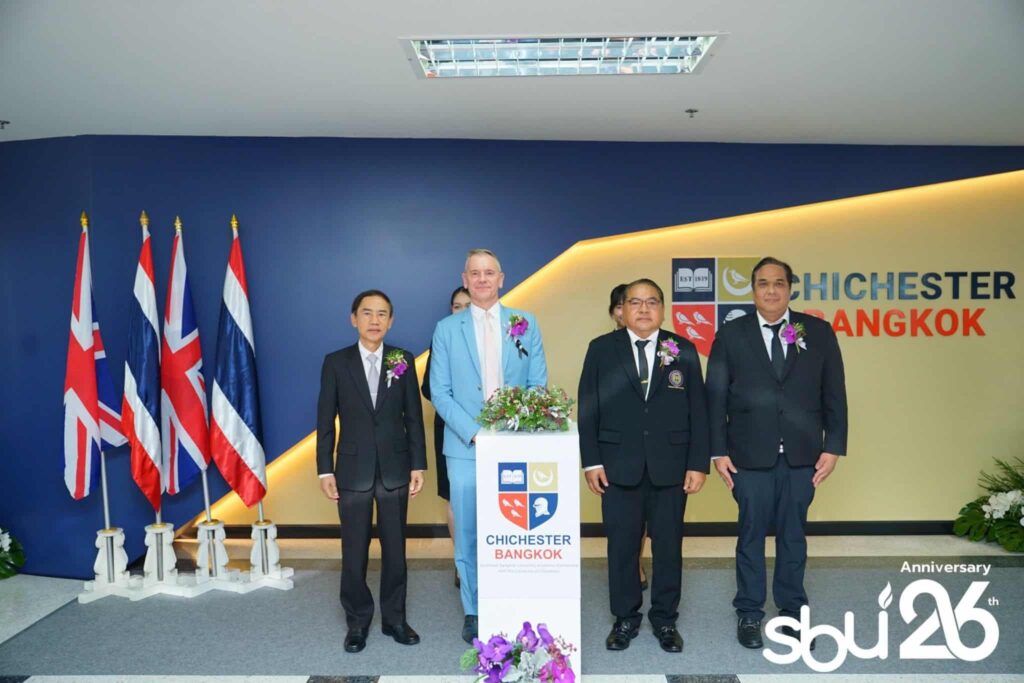
The opportunity to study two degrees at the same time in Thailand, through programmes such as the partnership between Southeast Bangkok University and University of Chichester, is becoming an increasingly attractive choice for students who want international opportunities without the high cost of studying abroad. Many students face a common problem. They want a UK degree because it is recognised worldwide, but studying in the UK can be very expensive. Tuition fees, living costs, and the challenge of moving to another country can make it difficult to achieve this goal.
Dual-degree programmes help solve this problem. Students can study in Thailand but graduate with both a Thai degree and a British degree. The UK degree follows the same academic standards and quality as studying in the UK, so students still gain international recognition. At the same time, they can save a significant amount of money and stay closer to home.
Another important issue is future career opportunities. A local degree alone may not always stand out in the global job market, while studying fully overseas may not provide enough understanding of the Asian context. Dual-degree programmes combine both advantages. Students develop strong English skills and critical thinking, which are key strengths of UK education, while also understanding the regional business and cultural environment.
In the end, this option offers real value. Students gain two recognised degrees, reduce costs, and improve their chances in an international career. It is a practical and worthwhile choice for students who want both quality education and better opportunities in the future.
Q&A International University: a UK Degree in Thailand with SBU

Q: Is studying at an international university expensive?
A: At Southeast Bangkok University, tuition fees range from 299,000 to 599,000 THB depending on the programme. When compared to the significantly higher total cost of studying in the UK, this pathway delivers the same international academic standard at a fraction of the price.
Students are not just saving money, they are investing in a UK-quality degree without the burden of overseas living costs, currency exchange pressure, or relocation expenses. It is a practical and strategic choice that maximises value while keeping future global opportunities within reach.
Q: What programmes are available?
A: Through the collaboration between Southeast Bangkok University and University of Chichester, students can choose from a wide range of programmes:
- Bachelor’s degrees (3 years or 1-year top-up), including Business English, Multimedia and E-Sports, Information Technology, and Business Administration with various specialisations.
- Master’s degrees (1 year), such as Information Technology, Education (multiple fields), and MBA programmes with specialised tracks including Healthcare Management.
- Doctoral degrees (3 years), including Doctor of Professional Studies (DProf) and Doctor of Business Administration (DBA).
Q: Are scholarships available?
A: Yes. Students can apply for scholarships of up to 120,000 THB. In addition, tuition fee discounts of 15–20% are available during the April to May intake (for Thai students who are not using scholarships).
However, both scholarships and discounted seats are limited, making early application important. This combination of financial support helps reduce the overall cost significantly, making a UK-standard education far more accessible and worth the investment.
International University Experience Without Going Abroad? Here’s How SBU Makes It Possible
Studying at an International University level no longer requires leaving the country. Through programmes such as those offered by Southeast Bangkok University in collaboration with the University of Chichester, students can access a UK-standard education while studying in Thailand. This model directly addresses the biggest barriers of overseas study, high tuition fees, living costs, and relocation stress, while still delivering globally recognised qualifications. More importantly, it shifts the idea of “studying abroad” into “studying globally at home,” where students gain international academic standards, English proficiency, and industry-relevant skills without sacrificing financial stability or personal comfort. In today’s competitive job market, this balance between global credibility and practical affordability is what makes the pathway not just attractive, but strategically valuable for long-term career success.