
Study Abroad Made Simple: A Beginner’s Guide to Global Education
Discover how to study abroad with this complete guide. Learn benefits, costs, requirements, and tips to start your international education journey.
Over the past two decades, the number of students who study abroad has grown dramatically. Millions of young people are now crossing borders each year to pursue higher education, gain global perspectives, and prepare for careers in an increasingly international job market.
Studying abroad is no longer just about earning a degree in another country. Today’s students are making strategic choices about where to study based on career opportunities, post-study work visas, and global industry connections.
Dreaming of studying in the United States, the United Kingdom, or discovering universities across Europe and Asia? The good news is that studying abroad is more possible than ever. With the right plan, you can turn that dream into a real step toward your future.
Why Study Abroad?
Studying abroad offers students the opportunity to experience a new culture, gain a global perspective, and develop important life skills. By living and learning in another country, students can improve their language abilities, become more independent, and learn how to adapt to different environments. It also allows them to meet people from diverse backgrounds and build international networks that may benefit their future careers. In addition, many universities abroad provide high-quality education, modern facilities, and unique academic programs that may not be available in a student’s home country. Overall, studying abroad helps students grow both academically and personally while preparing them to succeed in an increasingly globalized world.
- Why Study Abroad?
- The Cost of Studying Abroad
- Cost Comparison: Australia vs United Kingdom vs Asia
- Are There Scholarships for International Students?
- Types of Scholarships for Study Abroad
- Examples of Well-Known International Scholarships
- Key Requirements for Studying Abroad
- Can Students Work While Studying Abroad?
- Starting Your Study Abroad Journey: A Step-by-Step Guide
- UK Degree in Thailand: Global Prestige, Local Cost
The Cost of Studying Abroad
Studying abroad involves several types of expenses. Understanding these costs can help students plan their budget more effectively. Here is a simple breakdown:
- Tuition Fees – The main cost of studying abroad, which varies by country, university, and program.
- Accommodation – Housing options such as university dormitories, shared apartments, or private rentals.
- Living Expenses – Daily costs including food, groceries, transportation, and personal spending.
- Health Insurance – Required in many countries to cover medical care during your studies.
- Travel and Other Costs – Flights, visa application fees, books, and study materials.
Planning ahead and understanding these expenses can help students manage their finances and enjoy a smoother study abroad experience.
Cost Comparison: Australia vs United Kingdom vs Asia

When it comes to studying abroad, Australia, the United Kingdom, and Asia have emerged as the Big Three powerhouses for international students
Understanding the total cost is crucial for planning your journey. Tuition fees and living expenses vary widely depending on the destination. Below is a simplified comparison using US dollars (USD) with an approximate conversion to Thai Baht (THB) to help students estimate their budget more easily.
| Region | Tuition Fees (per year) | Living Costs (per year) | Estimated Total |
| Australia | $13,000 – $33,000 (≈ 455,000 – 1,155,000 THB) | $12,000 – $18,000 (≈ 420,000 – 630,000 THB) | $25,000 – $51,000 (≈ 875,000 – 1,785,000 THB) |
| United Kingdom | $14,000 – $48,000 (≈ 490,000 – 1,680,000 THB) | $12,000 – $20,000 (≈ 420,000 – 700,000 THB) | $26,000 – $68,000 (≈ 910,000 – 2,380,000 THB) |
| Asia (Japan, China, Singapore, etc.) | $3,000 – $15,000 (≈ 105,000 – 525,000 THB) | $5,000 – $12,000 (≈ 175,000 – 420,000 THB) | $8,000 – $27,000 (≈ 280,000 – 945,000 THB) |
Looking at these figures, it’s clear that a global education is a significant investment. While the experience of living in London or Sydney is invaluable, it shouldn’t come at the cost of financial strain or overwhelming debt. The goal of studying abroad is to open doors, not to create barriers.
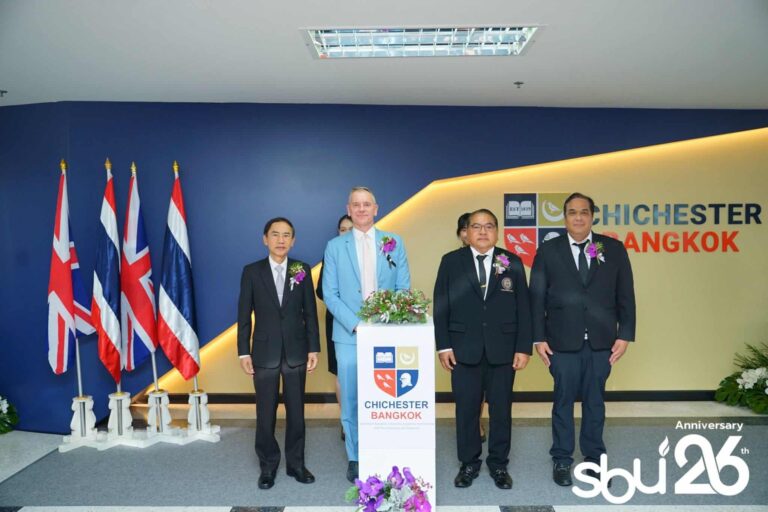
For many students today, the smartest path isn’t necessarily the most expensive one. If your goal is to earn a prestigious British qualification but you want to avoid high tuition fees and complex visa processes, there is a strategic alternative worth considering: The UK Degree in Thailand.
By delivering the exact same academic standards as the University of Chichester (UK) from a local campus, this hybrid model saves 50–70% on overall expenses. It is the ideal path for ambitious Asian students seeking a prestigious British qualification on a budget, as well as Thai students from EP or International programs whose families want to provide a world-class education without the financial strain or the need to be apart. Choosing this path ensures a stable and professional global future by providing world-class prestige without any financial burden.
Are There Scholarships for International Students?

There are many scholarships available for international students who want to study abroad. These scholarships are offered by governments, universities, and international organizations to help reduce the cost of tuition, living expenses, and sometimes travel. Some scholarships cover only part of the tuition fees, while others are fully funded, meaning they can cover tuition, accommodation, travel costs, and a monthly allowance.
Types of Scholarships for Study Abroad
1. Government-Funded Scholarships
Many countries offer scholarships to attract talented international students. These programs are often highly competitive but provide generous financial support. Examples include the Chevening Scholarship in the UK, which funds international students to pursue a master’s degree at British universities.
2. University Scholarships
Many universities provide scholarships specifically for international students. These may be based on academic performance, leadership potential, or other achievements. Some scholarships cover part of the tuition, while others may offer full funding depending on the program and institution.
3. International and Organization Scholarships
Global programs and organizations also support students studying abroad. For example, the Erasmus Mundus program in Europe allows students to study in multiple countries while receiving financial support for tuition and living costs.
Examples of Well-Known International Scholarships
- Fulbright Program (USA) – Provides funding for graduate study and research in the United States for students from over 150 countries.
- Chevening Scholarship (UK) – Fully funded scholarships for international students pursuing a master’s degree in the UK.
- DAAD Scholarships (Germany) – Supports international students studying master’s or doctoral programs in Germany.
- Australia Awards Scholarships – Covers tuition, travel, and living costs for students studying in Australia.
- MEXT Scholarship (Japan) – A government scholarship supporting international students studying at Japanese universities.
Key Requirements for Studying Abroad
To study abroad, students usually need to prepare several important requirements:
- Academic qualifications – Such as a high school diploma or a previous degree depending on the program level.
- English proficiency test – Many universities require proof of English ability through exams like IELTS or TOEFL.
Student visa – Students must apply for a visa that allows them to study in the destination country. - Required documents – These may include academic transcripts, a valid passport, a statement of purpose, and recommendation letters.
- Financial proof – Some countries require evidence that students can pay for tuition fees and living expenses.
- Health insurance – Required in many countries for international students.
Preparing these requirements in advance helps students apply and study abroad more smoothly.
Can Students Work While Studying Abroad?
Many international students can work while studying abroad to gain experience and help with living expenses. However, the rules depend on the country and the type of student visa. Some countries allow part-time work during the academic term, while others have strict regulations or limit working hours. For example, students in Australia and the United Kingdom are usually allowed to work part-time during their studies, but in the United States, international students are mostly limited to on-campus jobs. In some countries, such as China, working during studies can be more restricted. Therefore, students should always check the visa rules before planning to work abroad.
Starting Your Study Abroad Journey: A Step-by-Step Guide

Embarking on an international education is a multi-step process that typically begins 10–12 months before your intended start date. The journey starts with self-reflection and deep research to align your career goals with the right global opportunities. Once you’ve narrowed down your choices, the focus shifts to a rigorous application phase, followed by the logistical hurdles of securing a visa and arranging your move.
1. Research and Selection
Phase 1: 12–18 Months Before
- Define Your Goals: Identify your field of study and budget.
- Shortlist Destinations: Research countries that offer the best post-graduate opportunities or specialized programs in your field.
- Check Requirements: Confirm GPA, language test scores (IELTS/TOEFL), and application deadlines.
2. Building Your Profile
Phase 2: (9–12 Months Before)
- Standardized Testing: Register for and take necessary exams (GRE, GMAT, SAT, or English proficiency like IELTS/TOEFL). Aim to finish these early in case you need a retake.
- Transcript Procurement: Request official academic transcripts from your current or previous institutions. If they aren’t in English, you’ll need certified translations.
- The “Statement of Purpose” (SOP): Start drafting your personal essay. This is your chance to tell your story beyond your grades—why this program, and why now?
- Letters of Recommendation (LORs): Identify 2–3 academic or professional mentors and give them at least 4–6 weeks’ notice to write a thoughtful recommendation.
3. The Application Phase
Phase 3: 6–9 Months Before
- Final Review: Double-check specific department requirements, as these can differ from general university rules.
- Submission: Submit applications well before the deadline to account for any technical glitches or missing documents.
- Scholarship Applications: Many institutional scholarships have earlier deadlines than the general admission applications.
4. Acceptance and Logistics
Phase 4: 3–6 Months Before
- The Decision: Once you receive your “Offer of Admission,” formally accept and pay any required seat deposits.
- Financial Proof: Gather bank statements or loan documents; most countries require proof that you can cover tuition and living expenses before issuing a visa document (like an I-20 or CAS).
- The Visa Interview: Book your appointment at the embassy or consulate. Research the specific visa type (e.g., F-1, Student Route, or Study Permit) for your destination.
5. Pre-Departure
Phase 5: 1–3 Months Before
- Health and Housing: Secure student housing and complete any required vaccinations or health insurance enrollments.
- Flight and Tech: Book your travel and ensure your tech (laptop, phone) is compatible with local voltages or cellular bands.
6. The Final Countdown & Arrival
Phase 6: 2–4 Weeks Before Departure
- Financial Setup:
- Notify your bank of travel plans to prevent card blocks.
- Carry a small amount of local cash for immediate needs (taxis/food).
- Research local student bank accounts or digital banks.
- The Life Saver Folder:
- Print physical copies of your Visa, Passport, Offer Letter, Housing Contract, and Health Records.
- Keep these in your carry-on bag, as Immigration will ask for them upon arrival.
- Smart Packing:
- Pack for the weather but avoid overpacking; buy bulky items (coats/kitchenware) locally.
- Bring comforts of home like photos or non-perishable snacks.
- Arrival Logistics:
- Confirm your airport pickup or map out public transport to your housing.
- Download offline maps of your new city.
UK Degree in Thailand: Global Prestige, Local Cost
Today, studying abroad is no longer just a dream; it is a decision shaped by rising costs and complex visa hurdles. To break these barriers, a strategic alternative has emerged: The UK Degree in Thailand.
This hybrid model allows students to earn a prestigious British qualification without relocating (Studying a UK degree without going abroad). By maintaining UK quality standards while staying in Thailand, students can save 50–70% on overall costs. Choosing this path ensures a stable and professional global future by providing world-class prestige without any financial strain.
![[How to Save] Low Cost UK University](https://www.southeast.ac.th/wp-content/uploads/2026/07/loe-cost-uk-university-768x512.jpg)